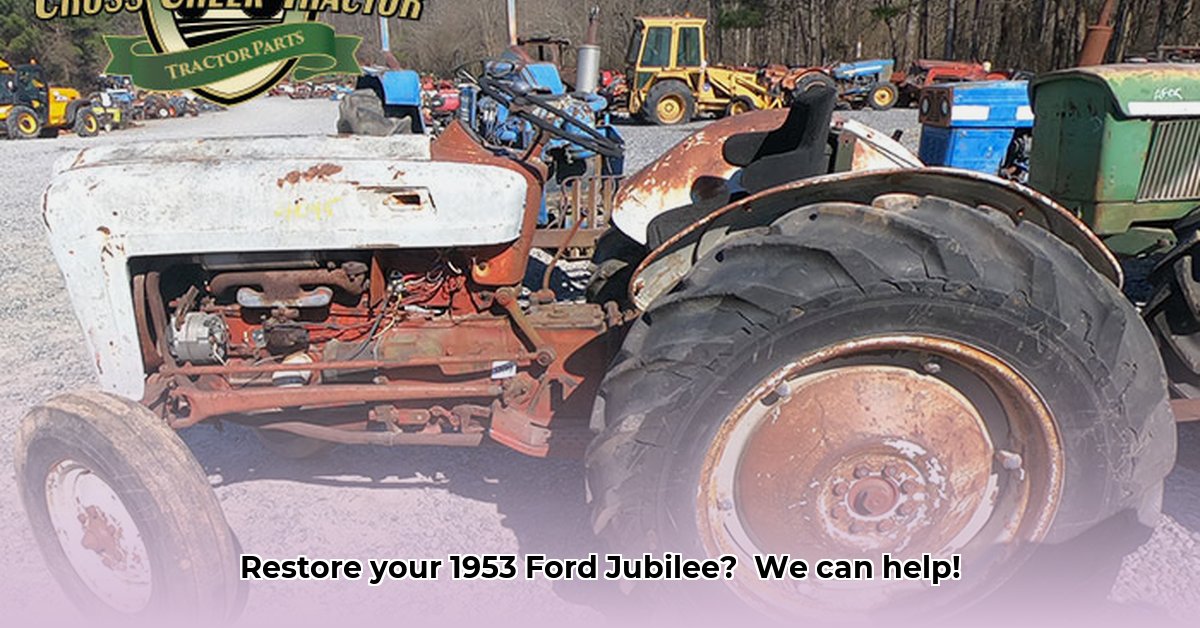
Bringing a classic 1953 Ford Jubilee tractor back to life is more than just a restoration project; it's a sustainable and potentially cost-effective way to maintain your agricultural operations. This guide provides a practical, step-by-step approach to sourcing parts, completing the restoration, and ensuring your Jubilee's longevity. For additional parts resources, check out this helpful website: Jubilee tractor parts.
Sourcing Parts for Your 1953 Ford Jubilee
Finding the right parts for your vintage Ford Jubilee can feel daunting, but with a strategic approach, the process becomes manageable. This section outlines effective methods for locating even the most elusive components. Remember, meticulous record-keeping throughout this process is crucial.
Online Marketplaces: Your Virtual Parts Depot
The internet offers a treasure trove of options. Many online marketplaces specialize in vintage tractor parts, offering a wide selection of components. However, always verify part numbers and descriptions to avoid compatibility issues. Websites like [insert relevant websites here] are excellent starting points.
Local Expertise: Tap into the Knowledge Base
Don't underestimate the value of local connections. Independent shops specializing in vintage tractor restoration possess extensive networks and can often locate hard-to-find parts. These experts also offer invaluable advice, acting as your personal guides through the restoration process.
Salvage Yards: Unearthing Hidden Gems
Salvage yards are often overlooked but can yield significant rewards. These scrapyards are like giant puzzles, offering the possibility of uncovering genuine bargains and rare components at a fraction of the price.
Online Communities: A Network of Enthusiasts
Joining online forums and groups dedicated to classic tractors provides access to a supportive community. Fellow enthusiasts share leads on parts, restoration advice, and even offer parts for sale directly. This collective knowledge base is an invaluable resource.
Identifying the Correct Parts: Precision is Key
Before purchasing any parts, accurate identification is paramount. Using detailed parts diagrams—often available online through vintage tractor resources or even from your local Ford dealership (if they have archival data)—will save you substantial time and frustration. These diagrams provide exploded views of your tractor's components, simplifying identification. Precise part numbers are crucial for ensuring compatibility.
Restoring Your 1953 Ford Jubilee: A Step-by-Step Guide
Restoring a 1953 Ford Jubilee is a rewarding project. Following these steps will ensure a successful and efficient restoration:
Meticulous Disassembly: Carefully disassemble your tractor, meticulously labeling and cataloging each part. Use labeled containers to keep components organized. This methodical approach prevents confusion during reassembly.
Thorough Cleaning: Clean each part to remove dirt, rust, and debris. This allows for a full assessment of the component's condition. Pressure washers, wire brushes, and degreasers are essential tools for this stage.
Comprehensive Assessment and Inventory: Carefully inspect each part, noting whether it’s reusable, repairable, or needs replacement. Create a detailed inventory of required parts, including part numbers and quantities. This list becomes your shopping list.
Repair, Replacement, and Sourcing: Repair any salvageable parts. For replacements, utilize your meticulous research and the part numbers identified earlier.
Precise Reassembly: Reassemble your tractor, using repair manuals, diagrams, or online resources as guides. Pay close attention to torque specifications and alignment for optimal functionality.
Rigorous Testing: Before operation, thoroughly test all systems to ensure everything functions correctly. This crucial final step verifies the success of the restoration.
Safety Note: Always prioritize safety by using appropriate protective gear, including eye protection, gloves, and suitable clothing.
Weighing the Pros and Cons of Restoration
Before embarking on this project, objectively assess the advantages and disadvantages:
| Pros | Cons |
|---|---|
| Substantial cost savings compared to new. | Requires mechanical skills and tools. |
| Environmentally friendly, reduces waste. | Parts sourcing can be time-consuming and difficult. |
| Incredibly rewarding and fulfilling project. | Potentially labor intensive and time-consuming. |
| Potential increase in tractor's value. | Unforeseen mechanical issues may arise. |
| Connection to a passionate community. | Requires a significant initial investment. |
Maintaining Your Restored Jubilee: Long-Term Care
Regular maintenance is vital for the longevity of your restored tractor. A consistent schedule including oil changes, lubrication, and inspections will minimize downtime and maximize your Jubilee's lifespan. Creating a maintenance schedule tailored to your usage is highly recommended.
Frequently Asked Questions
Q: Where can I find a parts manual for my 1953 Ford Jubilee?
A: Original manuals can be difficult to find. Check online marketplaces and vintage tractor parts specialists. You might also find digital copies or helpful community-generated resources online.
Q: How much does it typically cost to restore a 1953 Ford Jubilee?
A: Costs vary widely based on the tractor's initial condition and the availability of parts. A thorough budget is essential, encompassing parts, labor, and unforeseen repairs.
Q: What tools will I need for this restoration project?
A: The necessary tools depend largely on the extent of the restoration. A basic set of hand tools, as well as specialized tools for mechanical work, such as wrenches, sockets, and a torque wrench, may be needed. Consult repair manuals or online guides for specific tool requirements.
This comprehensive guide helps you restore your 1953 Ford Jubilee tractor and enjoy its benefits for years to come. Remember, the key to success lies in careful planning, meticulous execution, and a passion for preserving agricultural history.